Their Way: In Conversation With Five Oh
With ‘Their Way' Keytrade Bank and Horst inspire their shared philosophy of entrepreneurship and innovation through an interview series.

Keytrade and Horst share DIY entrepreneurship as a common denominator. With ‘Their Way’ they inspire their shared philosophy through a content series. ‘Their Way’ offers the stories of DIY entrepreneurs at the forefront of art, architecture and music. We delve into the messy, yet inspiring and insightful process of entrepreneurship. We celebrate and feature compelling stories, challenging initiatives and examples of integrity from around the world.
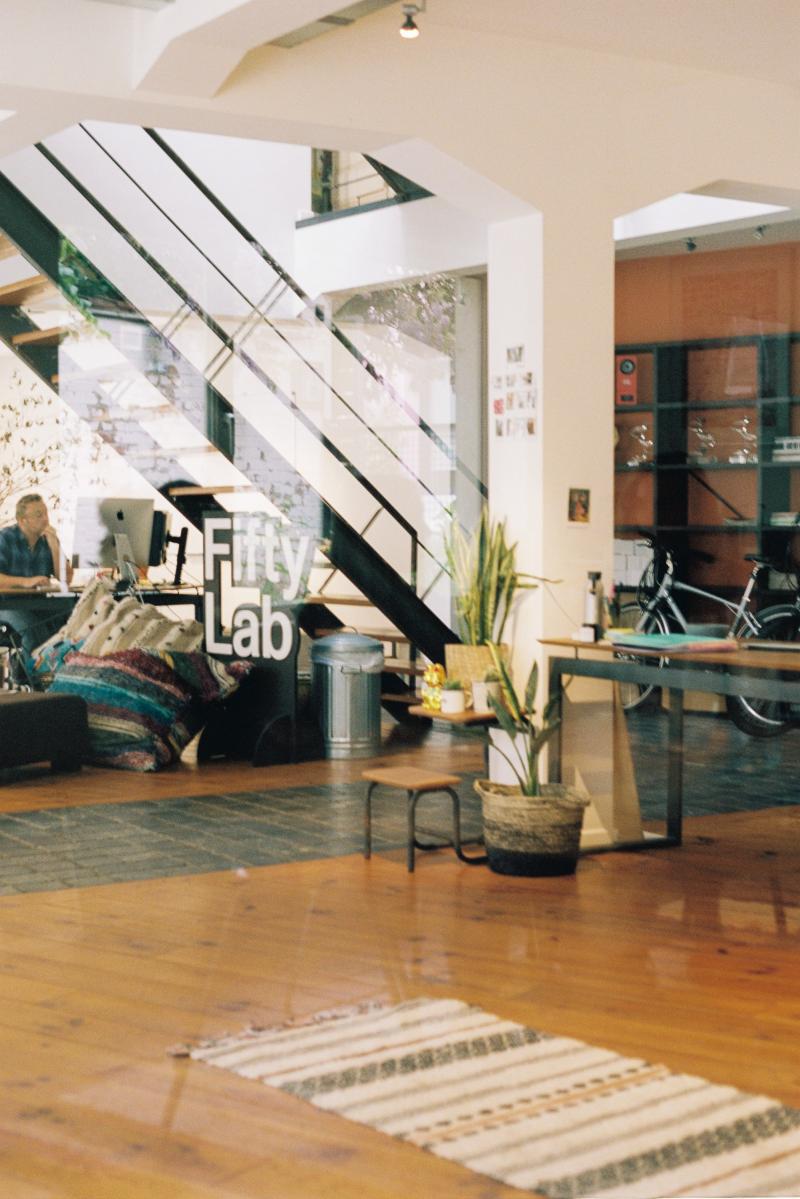
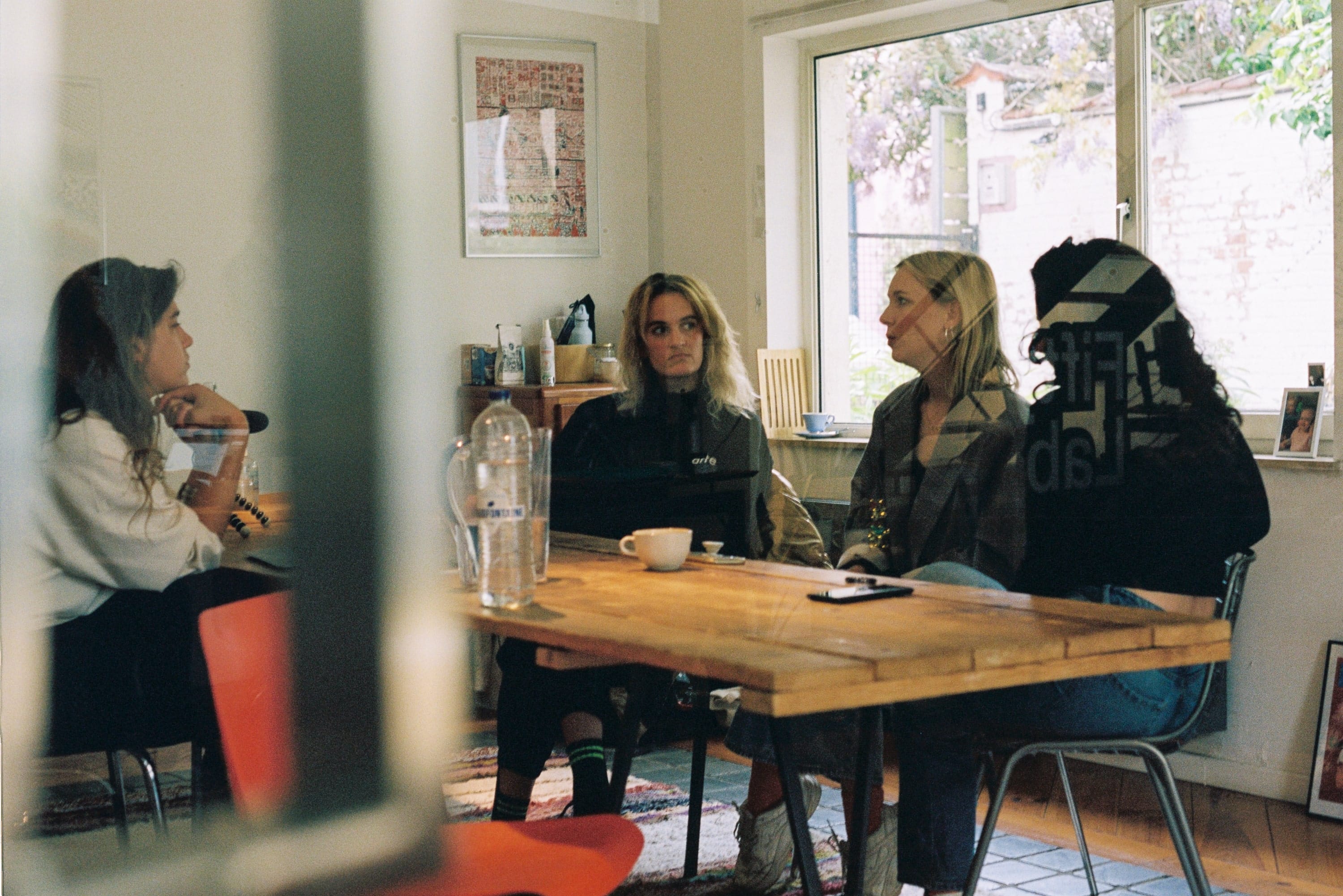
This month we visited Five Oh, a creative music PR agency founded and based in Brussels. They represent a wide and varied range of both Belgian and international artists, musical events and projects. Stretching their expertise anywhere on the spectrum from promotional to marketing-services, they also initiate their own events to boost artists’ visibility and ignite exchange and networking opportunities. We sat down with the core team in their cosy busy coworking space in Forest.
HORST : Hi, thanks for having us over. Can you tell us a bit more about yourself and how you got into this business?
Laetitia : I started out in the music industry in 2007, working for a long time with major labels and big companies, after which I moved to Paris to work at the small Choke Industry Label. This experience was very hands-on: publishing, management, booking, music studio… basically running the entire label with only two colleagues. That’s where the allround implications of how we can help artists economically survive became very clear to me. In 2014, a year after I got back to Brussels, I founded Five Oh.
HORST: How did Five Oh come to be?
Laetitia : I started out with promoting and doing PR for some artists. My main motivation was and still is working with artists I love. Of course the initial idea seemed absurd: starting a company with zero starting budget. Believe me, it felt like a battle. If one door would close, I would try to sneak in through the window. Luckily, some of those artists got bigger and bigger, which allowed us to position ourselves. I made sure to not get distracted, something of which I’m very proud now. My network threw a lot of propositions for artists at me, which would have fixed me the quick buck, but which didn’t fit with my vision and style. Being so stubborn at the time really pays off now. Journalists, venues, and bookers trust our judgement. Even though our scope is very wide and eclectic: jazz, electro, disco, pop, rap.. we represent very varied artists. We’re six years in now, and we still continue to fight for emerging talent! It’s amazing to start small together, and grow together. In the meantime, I also managed to build a beautiful team around me.
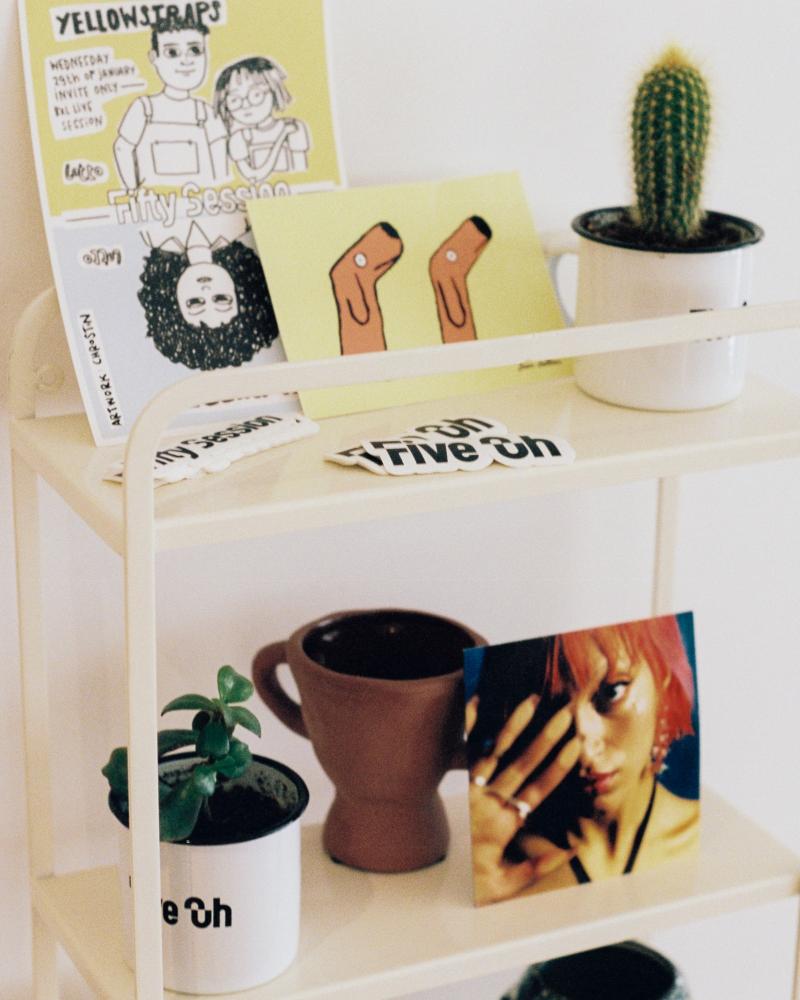
Marianne : I come from a theater background and am also a DJ myself. After working as a booker for Kurious, I got to know Fifty Sessions and Five Oh, and jumped at the opportunity to get involved when a job was announced. Because we’re also pretty small-scaled, the work here is so diverse: I can hop from event production, to strategically work out a timeline for an artist and build their narrative, to scooping out new talent. We’re very close, so it’s a good and open vibe.
Sacha : My name is Sacha, I studied journalism, did an internship here, and never left. I work as a project manager and also take care of the artists, and am involved with social media and our web presence.
Marianne : Jobs at Five Oh grow on what your passions and strengths are. We figure out who takes care of which artist based on personal click, and on who has the biggest crush on the sound.
HORST : What do you hope to bring to an artist’s career?
Laetitia : We always listen to the music before we meet the artist. When we finally meet, we do so with the entire team involved, in a collective and shared brainstorm. Our focus is to grasp the vision of the artist, even if they don’t know it yet themselves.
Marianne : We want to find an angle to their narrative, evoke an atmosphere, maybe like a form of storytelling.
HORST : Can you tell us a bit more about Fifty Sessions and Fifty Lab?
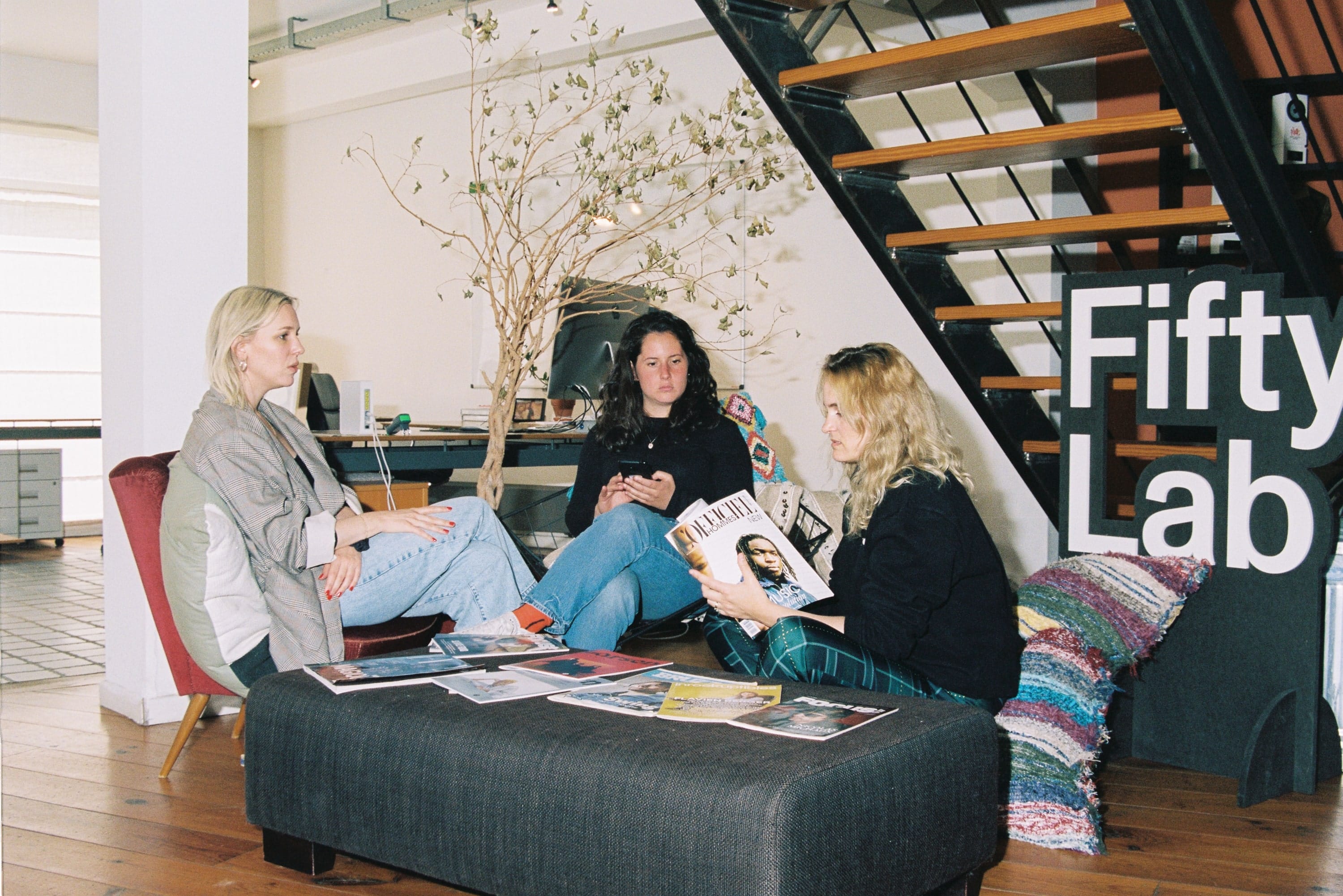
Laetitia : Quite soon after launching Five Oh, I kickstarted Fifty Session. With so many good live acts on my roster, and the big media who continue to solely focus on big names, I wanted to build a platform for live promo sessions. The featured artists weren’t even necessarily linked to Five Oh. We started our first concerts in the basement of the Jam-Hotel with a 100 pax capacity, which quickly scaled up to 250 pax, so we moved to C12 who is still our main partner today. The formula is that we always combine a promotional showcase for one Belgian and one international emerging artist. They each play for 25 min, and we make sure to invite the network: partners, media, collectives etc. In terms of venue, we like to change it up from time to time: KANAL, the Atomium, La Bourse, and now every Wednesday in summer in Parc Royal in collaboration with the City of Brussels.
Marianne : Of course it’s hectic because we do this event-planning on top of our regular business. But it’s a totally different dynamic, which also works as an inspiring catalyst for the rest of our practice. It slightly feels like a playground, in which we can go wild with curation, and create something that helps artists in a different way.
Laetitia : And as if that wasn’t enough work on our plate, we suddenly had the luminous idea to do our own festival in Brussels for emerging bands. We invited 20 music programmers from festivals from all over the world (Canada, The Netherlands, UK, Greece etc.), big and small, to program a line-up collectively. They would each send us two names of bands they had seen or already programmed themselves, so this meant 60 very eclectic gigs on three days over various locations in Brussels: Beursschouwburg, AB, Archiduc, Bonnefooi, C12, La Madeleine, FFormaTT etc. It was such an insightful and impactful experience: everyone got to know each other, artists were picked-up to suddenly play at big festivals etc. We’re doing it again this year from 17 to 19th of November.
HORST: What makes Five Oh stand out? How do you navigate the current societal challenges and the responsibilities that come with that in the music industry?
Laetitia: Our values are what guides us. We’re not in competition with others, but see the music industry both locally and globally as an ecosystem, in which we all have a role to play. We mainly judge ourselves and take care of our own artists in the way that feels most right.
Marianne: We like to affiliate ourselves with like-minded organisations as well, like Horst for instance, but also Volta, Jeunes Bosses (Frenetik’s management team)... other initiatives that roll with the punches. But of course navigating this field also comes with ethical challenges, sometimes we don’t agree - that’s normal in a people-business like music. So if a conflict arises, we try to find the time and the right words to express our concerns respectfully, without blowing bridges or putting the artist’s career at risk.
We represent a lot of P.o.C., while most of us in the staff are white. So it’s a daily exercise to put everything into question, make sure we’re not overlooking any blinds spots resulting from our own privilege, and ensuring a safe space for the people we’re working with. We always prefer to have open conversations with our artists, and take things a bit slower, then to rush things which could jeopardize relationships we’ve worked long and hard for.
Recently we had an extensive discussion about lyrics that felt hugely misogynistic and sexist at first. When speaking to the artist, it appeared to be quotes that were very inherent to that kind of music. So on the one hand, you feel offended as a woman, but on the other hand you don’t want to limit freedom of speech and artistic expression. While we were talking, I also became more and more aware of my own opinion, which is very enriching if you can do that in a context where everyone’s opinion is respected.
Laetitia: That’s also the advantage of being such a small company. It’s just us three talking, perhaps with someone freelance who is also on the project, and the artist, but we don’t need to schedule these conversations. They come naturally.
HORST : How are you financially structured?
Laetitia : Basically we have contracts with each of our artists: they pay us for a mission which is limited in time. This is what it all comes down to. For instance this can be a six-month promo assignment when someone launches a new album. Or a short project where we generate visibility for a specific event or a party. We’re always directly linked to the music. Most of our clients are artists, but we also have events like Primavera, or you, Horst Arts & Music.
Marianne : It’s very one-on-one. So our construction isn’t complex: people come to us, we talk, we make an offer, hopefully they accept, and then we’re ready to go!
Laetitia : Our network is primordial of course, because we remain on the lookout for fresh talent and don’t want to depend solely on traditional media. Knowing where the underground parties take place, who does home concerts, it’s really about going out and getting in touch on the field. That’s why we’re so closely intertwined with Brussels. Fifty Sessions is a different story: there we work with subsidies to organise our events. People are invited, so they don’t pay to come.
HORST: What does the current pandemic mean for a structure as yours, working with emerging and established talent, but doing so in a sector which isn’t considered essential?
Laetitia : It’s so strange, and I’m starting to experience it more and more as something violent. So many people we know are losing their jobs and/or losing their passion.
Marianne : Many artists are financially forced to abandon their music. There is a lot of expertise leaving the sector. It’s pretty traumatic. And there is so much collateral damage: I think we are missing some crucial existential and philosophical discussions on how we define what is healthy. What is health? Is it staying alive or is it having a life? For the sector, I think it’s a little bit too early to say what will come out of it.
Laetitia : Personally I’m getting quite agitated from the so-called ‘live-streamings’ online. For me that isn’t ‘live’. We need to go back to the social experience. It’s ironic, because Fifty Sessions started out as an live-streamed event, it has been for five years. Our media partners would share the actual concert on their socials. It was pretty cool, because nobody was doing it. But honestly, at this point, I never want to do a live stream anymore. We prefer now to for instance collaborate with a video team, make artistic mini-documentaries to feature an artist, and invest on that rather than on live streams.
HORST: It’s clear that you are all working from passion so there must be a tricky life-work balance. How do you manage?
Laetitia : We spent so much time at concerts, with people with whom we share passions and interests. They become friends, or even lovers. Of course it’s a thin line between celebrating your passion and becoming over-indulgent. I have my tricks to calm me down, which are my kids. I have three of them at home, and they form my boundary. I do go to concerts etc. with them, but if they are around, I never check my phone. They are my detox.
Marianne : Unfortunately I do have a tendency to go beyond my limit. I always have, and I’m learning how to be more careful. I recently gave birth as well, so it’s true that a child at home helps to impose breaks from work. But I also need my time without her, it’s very consuming to constantly be together with your kid and have no me-time. On top of that, my boyfriend also works in the industry, so yeah, it tends to be a lot. But we help each other out in navigating these challenges. And Laetitia makes sure that Five Oh gives us a healthy climate to work in.
HORST : Do you have any advice for younger people that want to start their own business?
Laetitia : I would say: keep your values close! If you don’t work according to them, everything will slowly crumble down. They are worth fighting for. Do as I did: if someone shuts a door, go by the window. Because doors are always closed. Every start is tricky. Oh and make sure you find the right partners and allies!


